What Types of Electric Vehicle Charging Stations Are There?
Explore AC and DC charging stations, wallboxes, fleet and destination charging, power levels and the criteria that matter when choosing a charger.
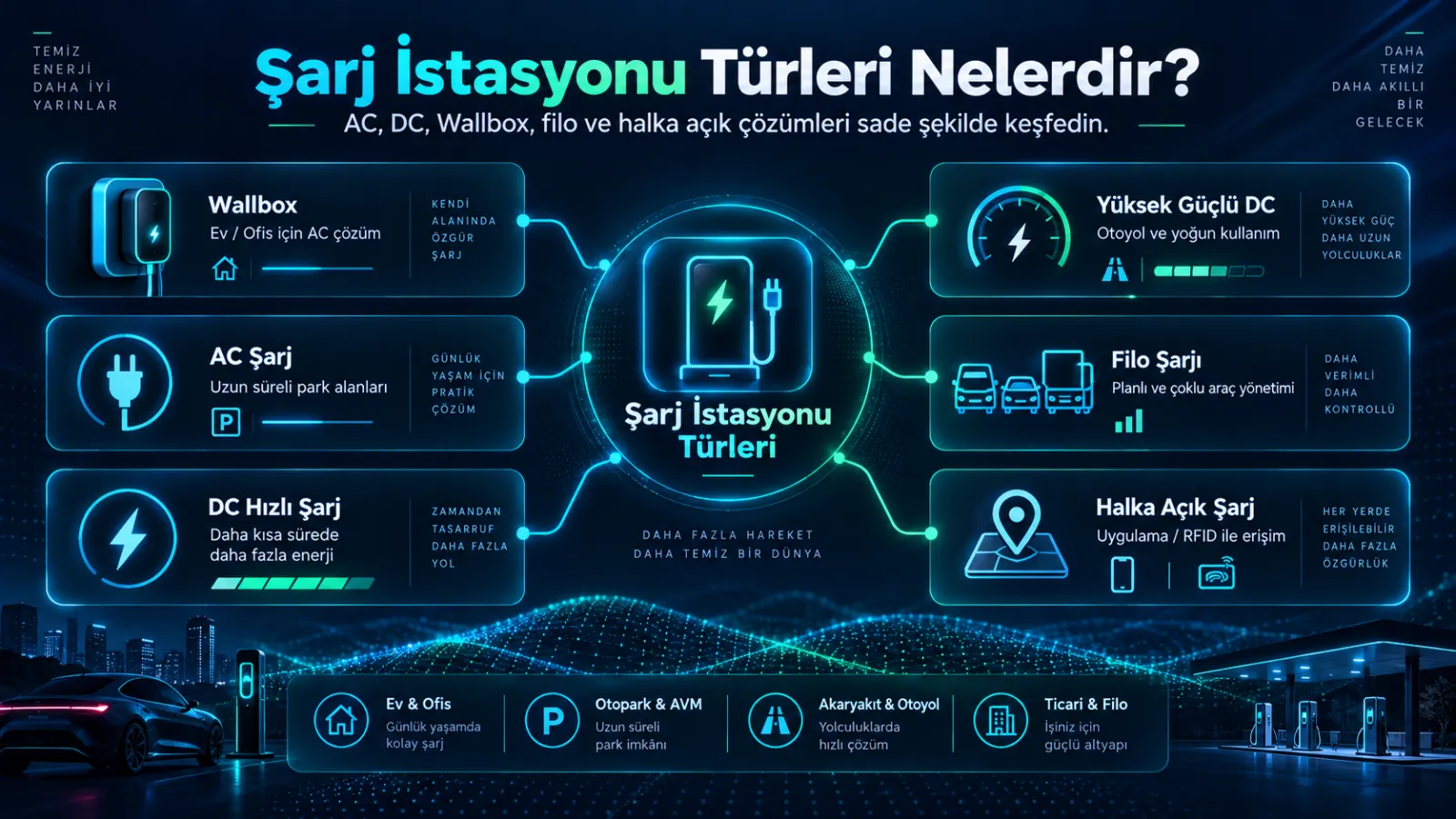
Table of contents
What Types of Electric Vehicle Charging Stations Are There?
EV charging stations do not come in a single form. The right equipment depends on the purpose of the site, parking duration, electrical infrastructure and the speed users need. The broadest distinction is between AC stations and DC fast chargers, but practical choices extend from a home wallbox to a high-power commercial installation.
How are charging stations classified?
Stations can be grouped by current type, power rating, connector, location, user access and the number of vehicles they can charge at once. Two units that look similar may serve very different purposes.
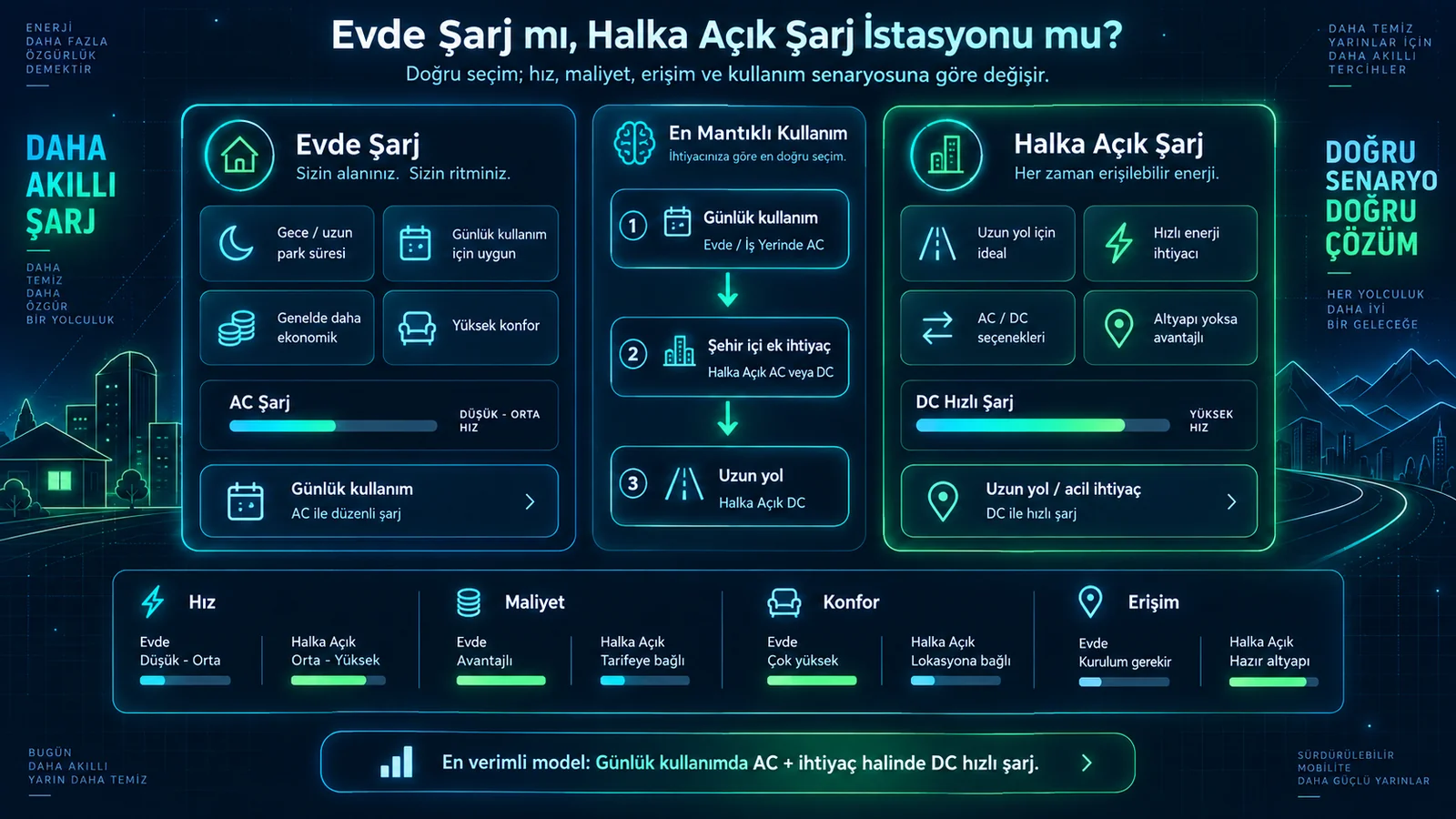
What is an AC charging station?
An AC station supplies alternating current to the vehicle. The vehicle’s onboard charger converts it into the direct current stored in the battery.
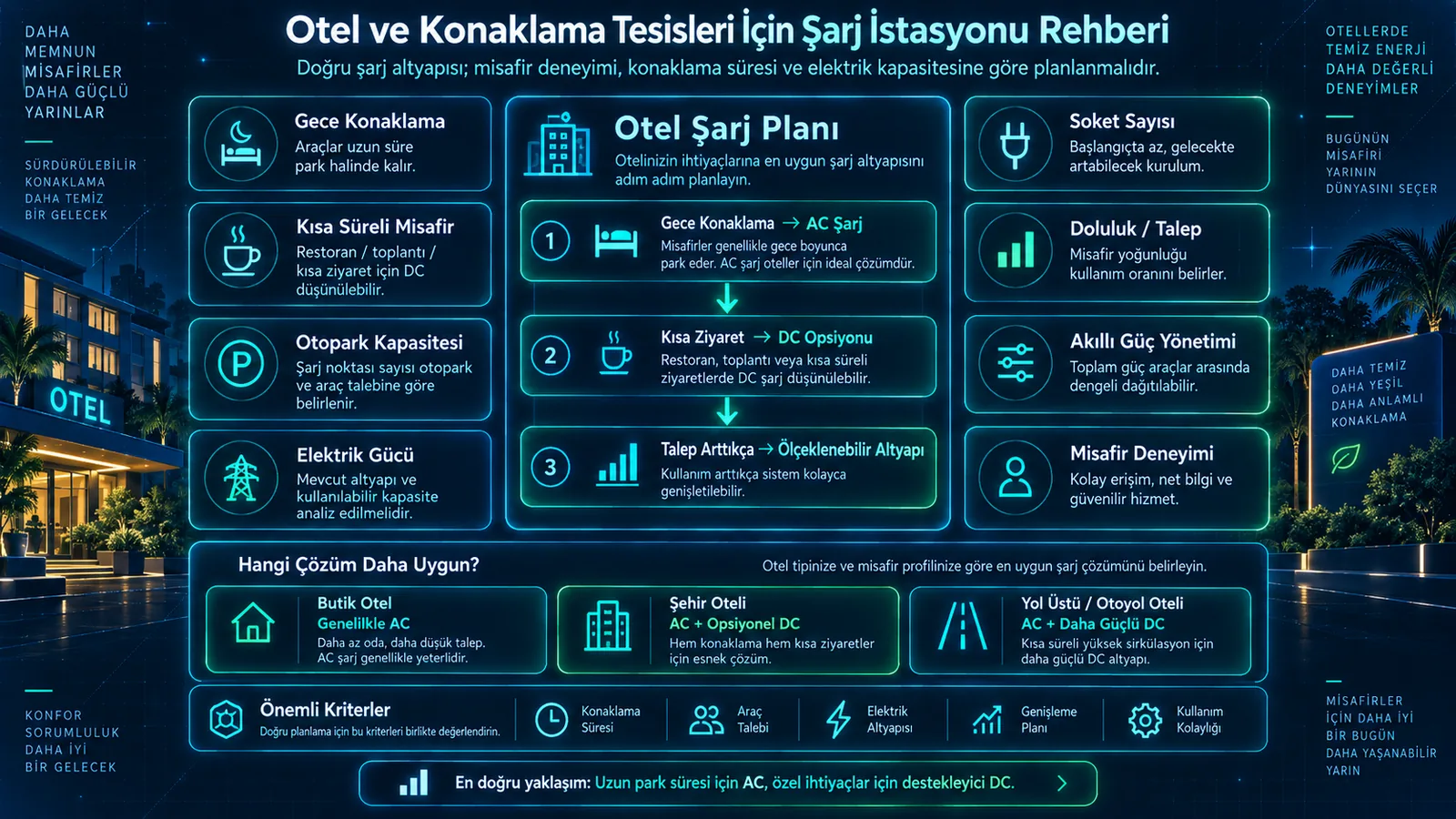
AC charging is common at homes, workplaces, hotels, shopping centres and long-stay car parks, where vehicles can remain parked for hours.
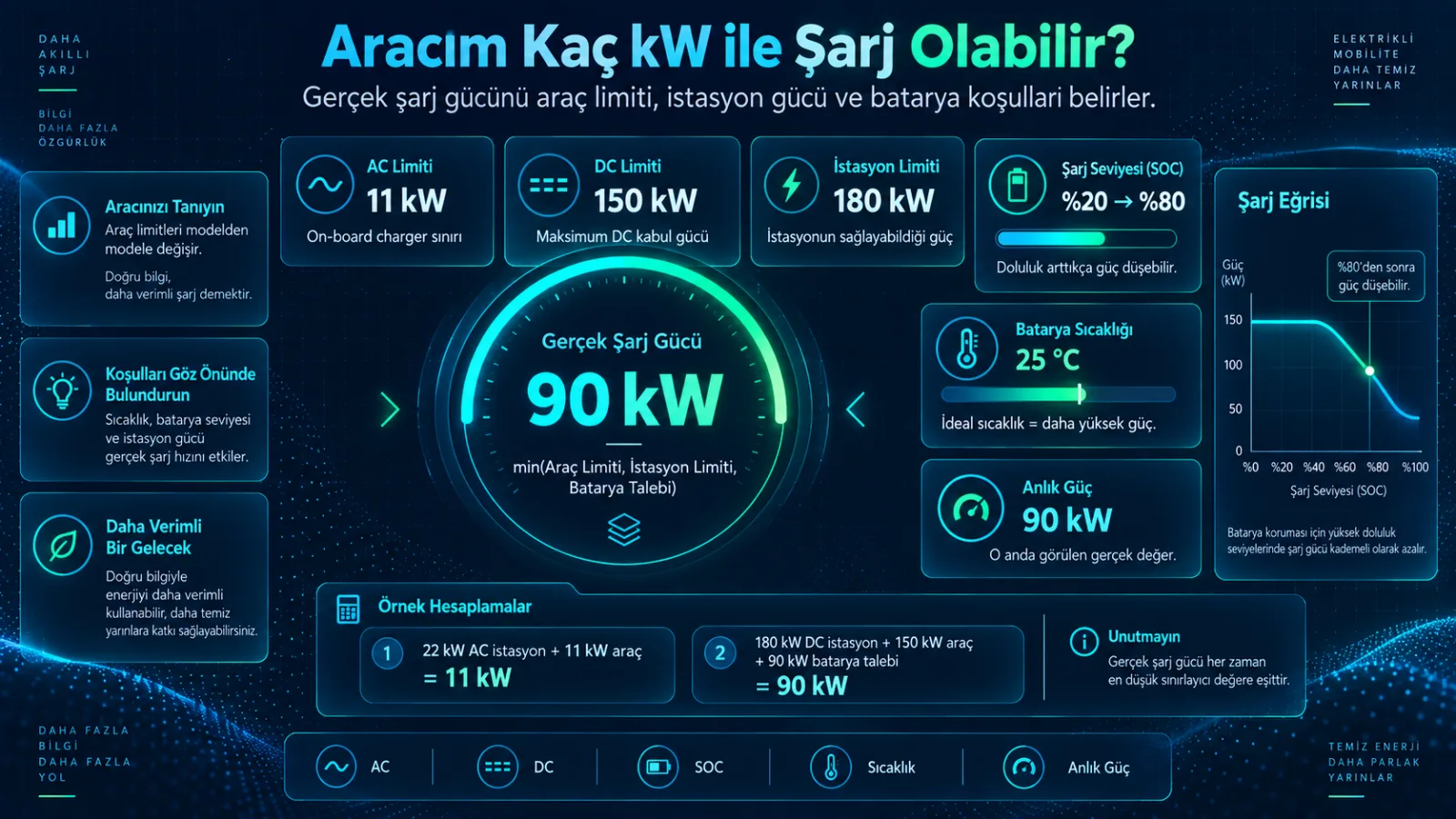
AC power levels
Common AC ratings are 3.7, 7.4, 11 and 22 kW. A 22 kW station will still charge a vehicle at around 11 kW if its onboard charger accepts a maximum of 11 kW. Vehicle capability therefore matters when selecting an AC unit.
What is a wallbox?
A wallbox is a compact AC charger mounted on a wall or another suitable surface. It is often used at homes, apartment car parks, offices and small businesses.
Compared with an ordinary socket, an appropriately installed wallbox can provide safer, more controlled charging. Depending on the model, it may offer power adjustment, user authorisation, energy tracking, remote management and scheduling.
What is a pedestal-mounted AC station?
Some AC chargers are installed on a freestanding pedestal rather than a wall. These can suit outdoor car parks, municipal spaces, commercial facilities and shopping centres. Single- and dual-connector versions exist; a dual-connector model may serve two vehicles simultaneously, subject to its power configuration.
What is a DC fast charging station?
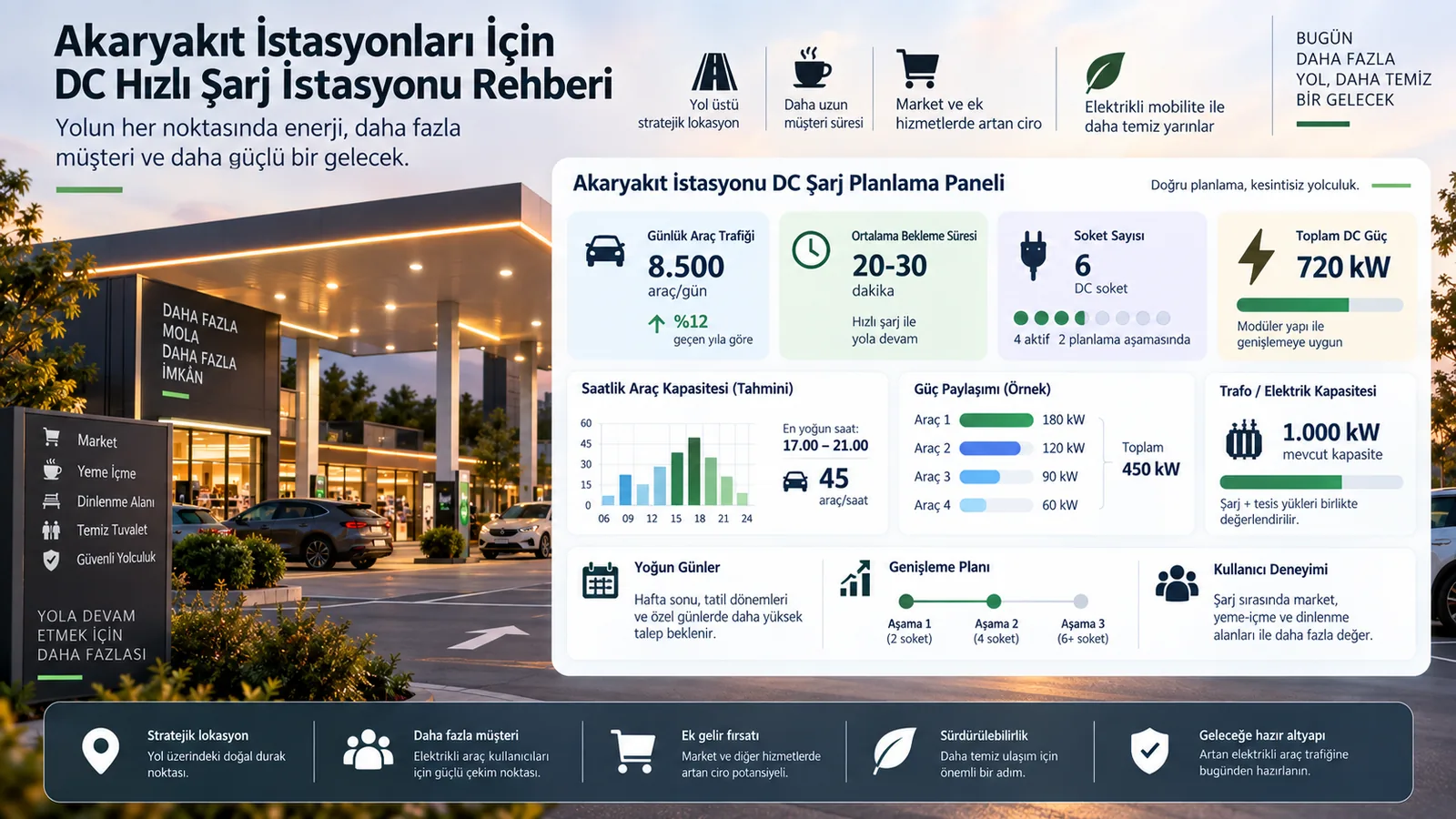
A DC station converts grid AC into DC within the station and supplies that energy to the vehicle’s battery. This permits much higher power than typical AC charging and is often used on highways, at fuel stations and rest stops, at busy commercial sites and in fleet operations.
DC power levels
DC equipment may be offered at 30, 40, 60, 120, 180, 240 or 320 kW, among other ratings. The aim is not to choose the largest number. A very high-power installation may be uneconomical at a site with little vehicle traffic.
Lower-power DC
A 30–40 kW DC station can charge faster than typical AC equipment while potentially requiring less infrastructure than high-power DC. It can suit urban locations, restaurants, hotels, smaller commercial sites and low- to medium-traffic areas, especially where stays are roughly 30–90 minutes.
Medium-power DC
Stations around 60–120 kW can serve intercity roads, fuel stations, busier commercial sites and fleets. They may offer a useful balance between charging speed and infrastructure investment.
High-power DC
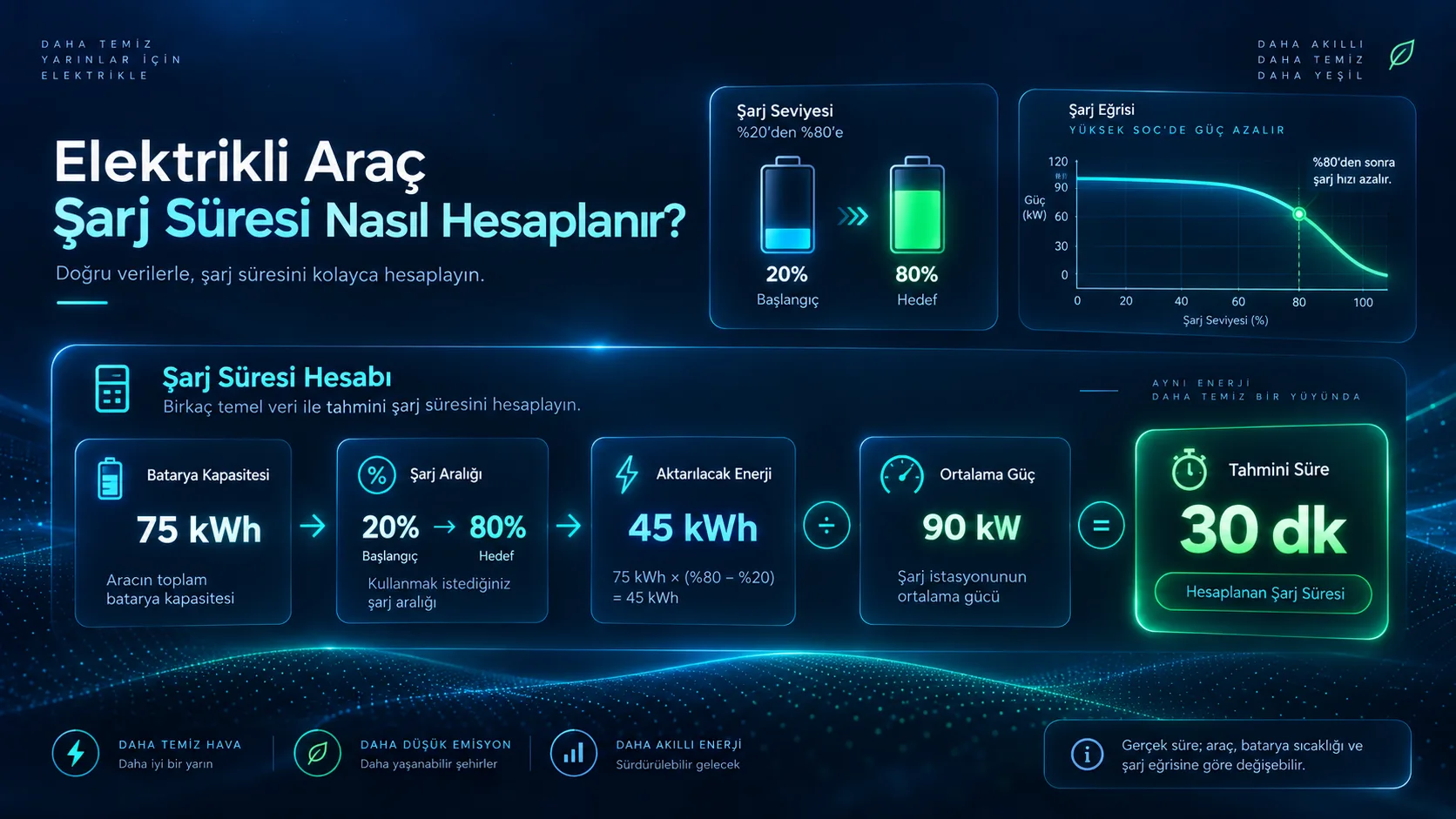
Stations rated at 150 kW or above often serve sites where quick vehicle turnover matters: highways, busy charging hubs and larger commercial locations. These installations need sufficient electrical capacity. Cable design, cooling, power modules and thermal management become particularly important at higher current.
What does “ultra-fast charging” mean?
“Ultra-fast” is not a universally standardised power class. It is often used as an industry or marketing term for DC stations of roughly 150 kW and above. Some systems exceed 300 kW, but the vehicle must support that power. A vehicle limited to 100 kW does not gain 300 kW charging merely by connecting to a 300 kW station.
Single- and dual-connector DC stations
A single-connector station serves one vehicle at a time. A dual-connector station may charge two simultaneously, but the way total power is allocated is as important as connector count.
For example, a 120 kW dual-connector unit might deliver up to 120 kW to one vehicle or 60 + 60 kW to two. Another design might distribute power dynamically according to vehicle demand. Always check the station’s power-sharing architecture.
What is power sharing?
Power sharing allocates a charger’s total capacity across multiple connectors or vehicles. On a suitable 180 kW system, one vehicle requesting 120 kW and another requesting 40 kW could receive those amounts at the same time. The unused capacity might remain available or be assigned elsewhere, depending on the installation.
Mobile and portable charging
Not every charger is a fixed public station. Mobile equipment can support service vehicles, roadside assistance, temporary events, testing or maintenance. Such systems address specific needs rather than replacing a permanent commercial site.
Portable AC chargers can draw power from a suitable socket. However, the electrical installation must be appropriate for sustained current. An ordinary socket is not necessarily designed for continuous high-power use, so a properly installed wallbox or dedicated charging infrastructure is usually preferable for regular charging.
Public and private charging stations
Public stations are accessible to multiple users and may provide AC, DC or both. Access can be handled through a mobile app, RFID card, QR code or payment system; commercial units may communicate with central management software.
Private stations restrict access to groups such as employees, fleet drivers, hotel guests or residents. User authorisation, including RFID, can help manage that access.
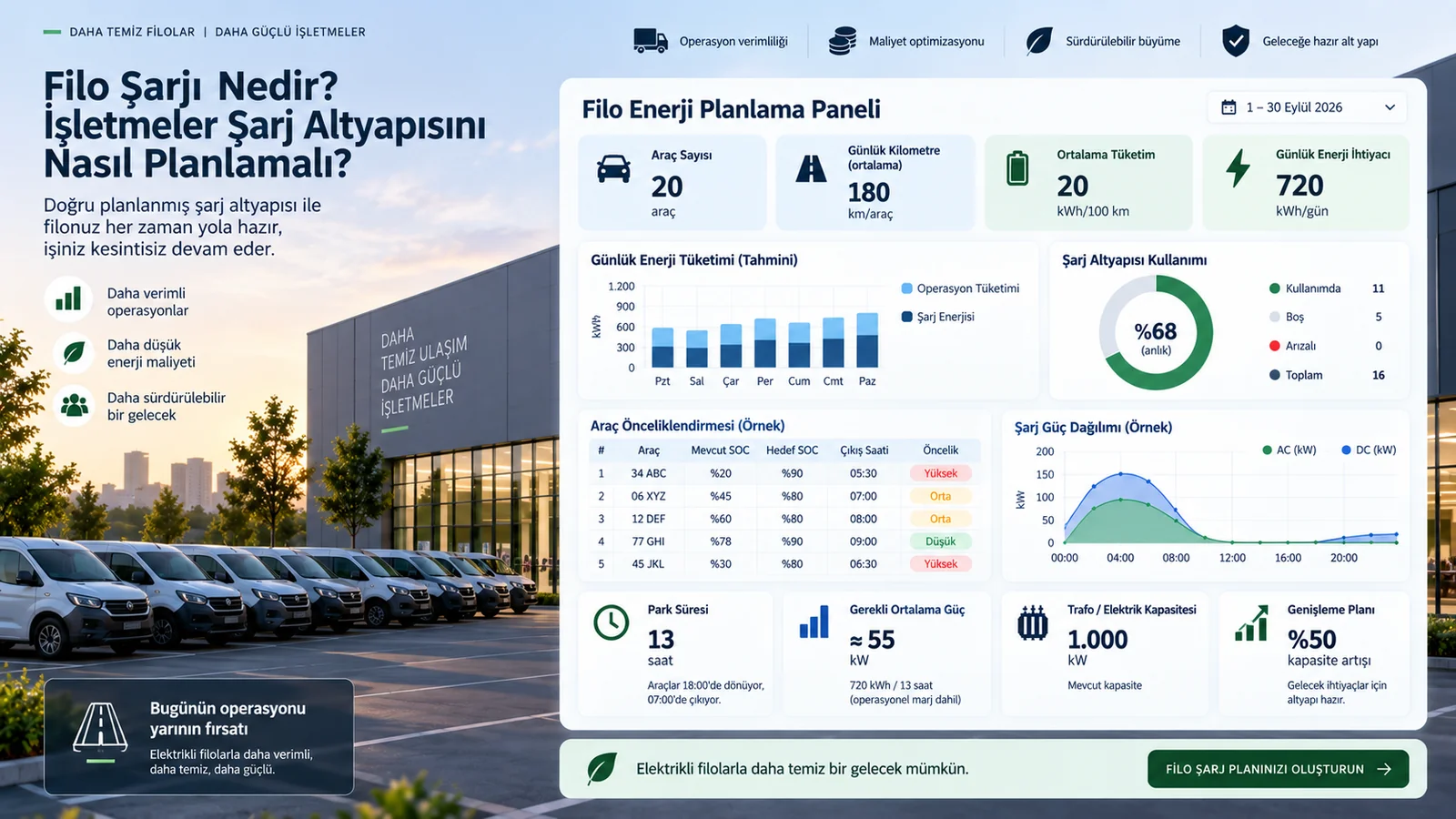
What makes fleet charging different?
Fleet installations must reflect shift times, daily mileage, return times, electrical capacity and the number of vehicles charging together. Energy management matters as much as individual charger power. Rather than charging every vehicle at maximum power simultaneously, a system can distribute available power across the night.
What is destination charging?
Destination charging takes place where a driver is already planning to spend time: a hotel, restaurant, shopping centre, workplace or tourist venue. AC may be sufficient for longer stays; lower-power DC may make sense when visits are shorter.
What is en-route fast charging?
On an intercity journey, drivers often need enough energy to continue, rather than a full battery. High-power DC, multiple connectors, easy access and quick turnover matter at these sites. Location planning is at least as important as the charger’s power rating.
Can a site offer both AC and DC?
Yes. A shopping centre, for example, may provide AC points for longer visits and DC points for people who need a quick top-up. A mixed installation can serve different users in one location.
What should you consider when choosing a station?
Look beyond the maximum kW rating:
- Parking time: an eight-hour stay may suit AC; a 20-minute stop may call for high-power DC.
- Daily vehicle count: a busy site may need more connectors or greater capacity.
- Electrical infrastructure: available grid power directly constrains the design.
- Vehicle mix: the vehicles’ AC and DC capabilities matter.
- Business goal: an employee benefit, customer service, revenue model and fleet operation can each need a different arrangement.
| Location | General starting point |
|---|---|
| Home or apartment | AC wallbox or AC station |
| Office | AC |
| Hotel | AC or lower-power DC |
| Shopping centre | AC + DC |
| Restaurant | AC or DC, based on visit length |
| Fuel station | DC fast charging |
| Highway | High-power DC |
| Fleet depot | AC + DC with power management |
| Commercial charging hub | Multiple DC units, potentially with AC |
This table is only a starting point. The actual solution should follow a site assessment.
Is the most powerful charger always best?
No. Higher power often means greater electrical capacity, capital cost and thermal-management requirements. If the vehicles cannot use that power, or traffic is low, the investment may be unnecessarily large.
The aim is to choose power that matches demand, not simply the highest available rating.
How might charging stations evolve?
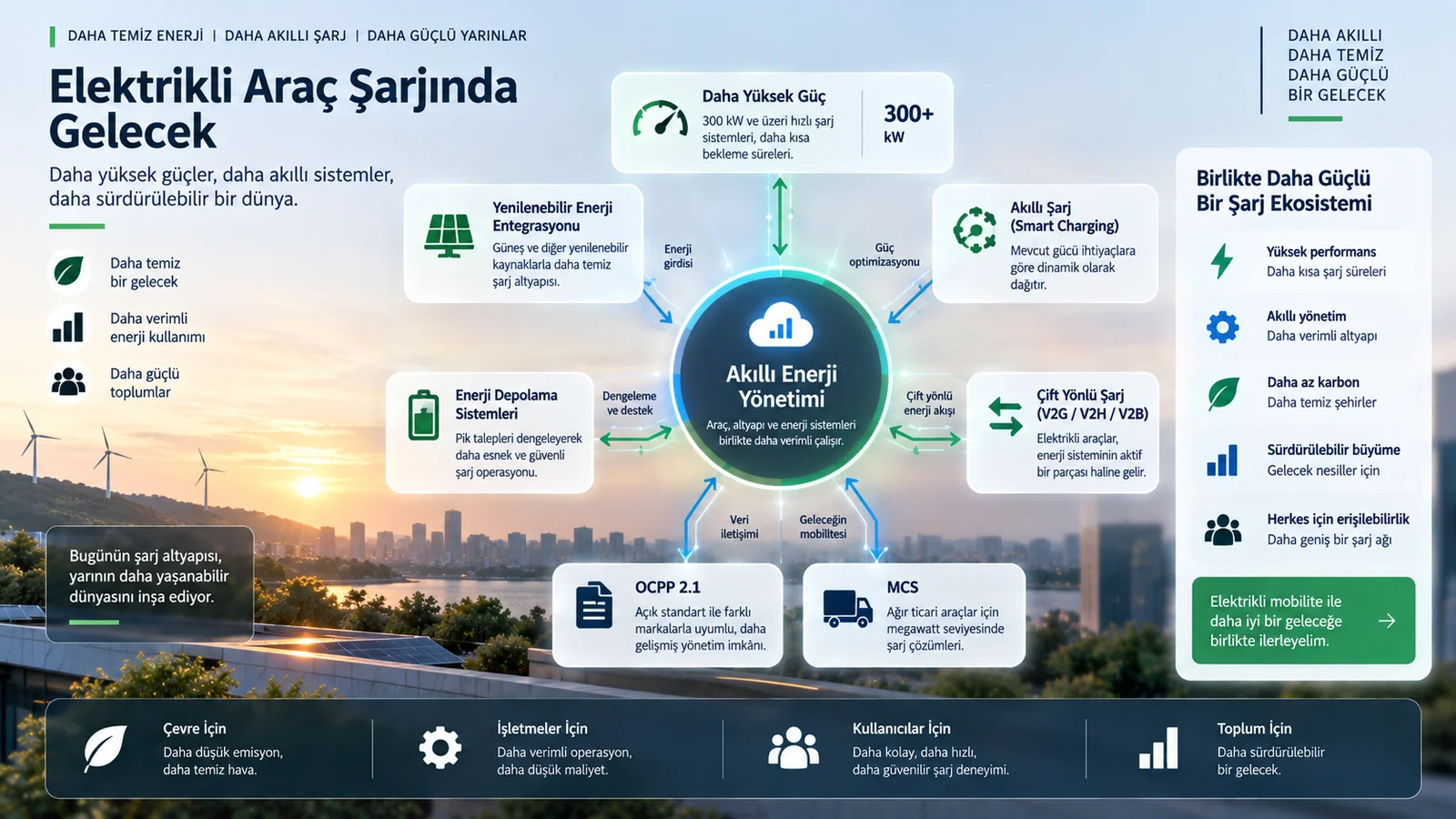
As EV adoption grows, charging infrastructure may include higher power, dynamic power sharing, energy storage, solar integration, smart-grid management and more automated user identification. The underlying need remains the same: appropriate power, for the right vehicles, at the right site.
Conclusion
EV charging encompasses AC, DC fast and high-power DC stations, wallboxes, fleet infrastructure, destination charging and public networks. Each serves a different use case. Parking duration, traffic, site capacity, users and investment goals should guide the decision. The best station is the one that meets the location’s actual needs.
About the author
Charge Teknoloji
Charging Infrastructure Team
Charge Teknoloji develops locally manufactured DC charging stations and OCPP-compatible charging network software.
LinkedIn arrow_outwardBe the first to hear about updates
Follow new content on electric vehicles and charging technologies.