How Do You Calculate EV Charging Time?
Learn the charging-time formula, the difference between kW and kWh, AC and DC examples, and the factors that change real charging time.
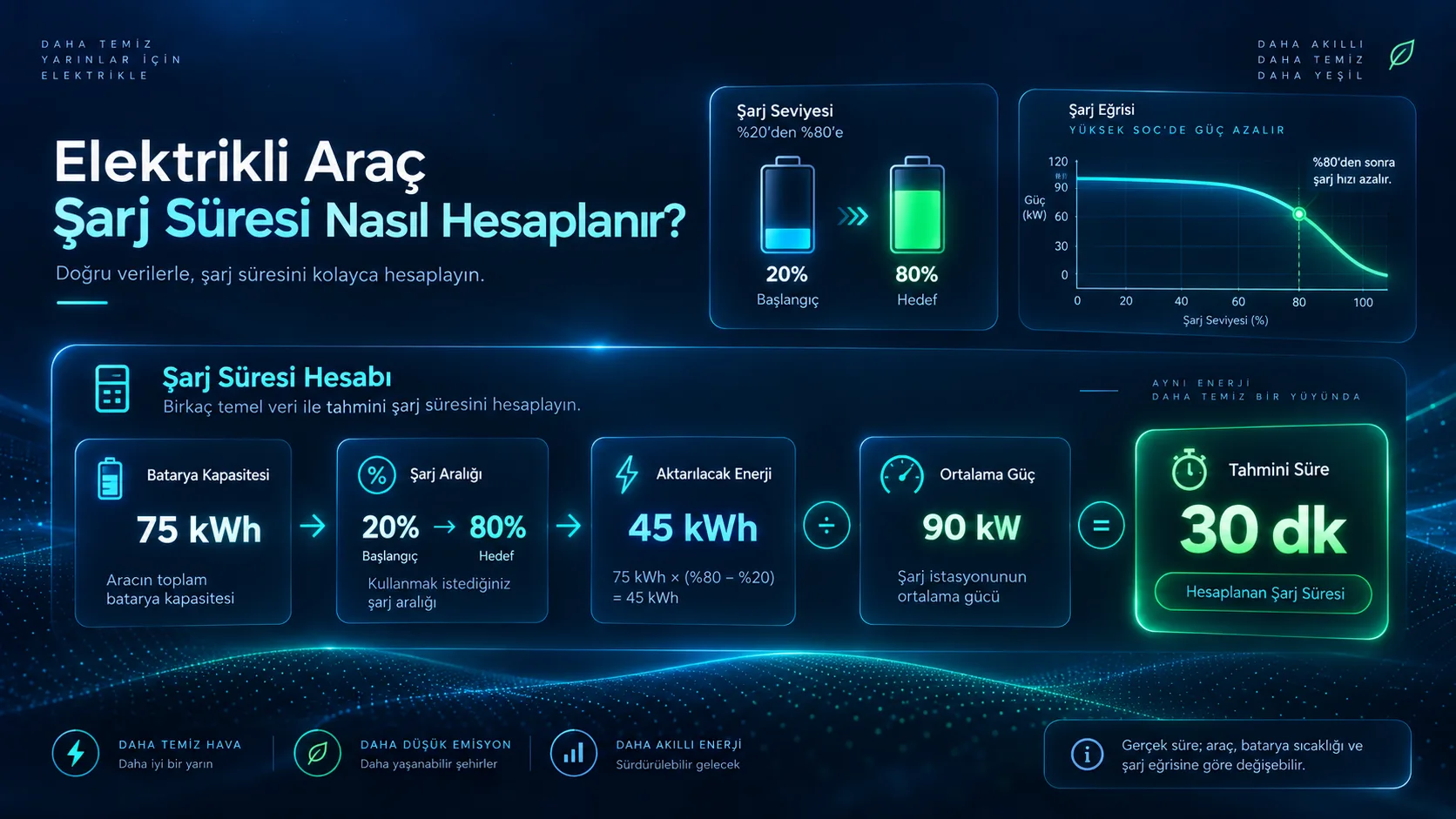
Table of contents
How Do You Calculate EV Charging Time?
One of the most common questions from EV drivers is: “How long will my car take to charge?” There is no fixed answer. Time depends on battery capacity, the station’s output, the vehicle’s charging limits and its current state of charge. A simple calculation can still provide a useful estimate.
The basic charging-time formula
Charging time = Energy needed ÷ Average charging power
If a battery needs 60 kWh and the average charging power is 60 kW, the theoretical time is:
60 kWh ÷ 60 kW = 1 hour
This represents idealised conditions. A real session can take longer.
The difference between kW and kWh
kW (kilowatts) measures power: the rate at which energy can be delivered. Examples include 11 kW AC or 120 kW DC.
kWh (kilowatt-hours) measures an amount of energy, such as a 60 kWh battery capacity or 40 kWh delivered in a charging session.
In short, kW is the rate; kWh is the amount. Both are needed to estimate time.
Are you charging the entire battery?
Most sessions do not run from 0% to 100%. Suppose an 80 kWh battery starts at 20% and the driver wants to reach 80%. The increase is 60 percentage points, so the battery needs approximately:
80 kWh × 0.60 = 48 kWh
This is the energy to use in the time calculation, rather than the battery’s full 80 kWh capacity.
Example: charging at an average of 60 kW DC
For that 80 kWh battery going from 20% to 80%, the simplified calculation is:
48 kWh ÷ 60 kW = 0.8 hour = 48 minutes
The actual session could take longer if the vehicle does not maintain an average of 60 kW.
Example: charging at an average of 120 kW DC
With the same 48 kWh energy need:
48 kWh ÷ 120 kW = 0.4 hour = 24 minutes
But this estimate is valid only if the vehicle can actually sustain an average of 120 kW. Plugging a car limited to 75 kW DC into a 120 kW station does not make it charge at 120 kW.
Vehicle and station power limits
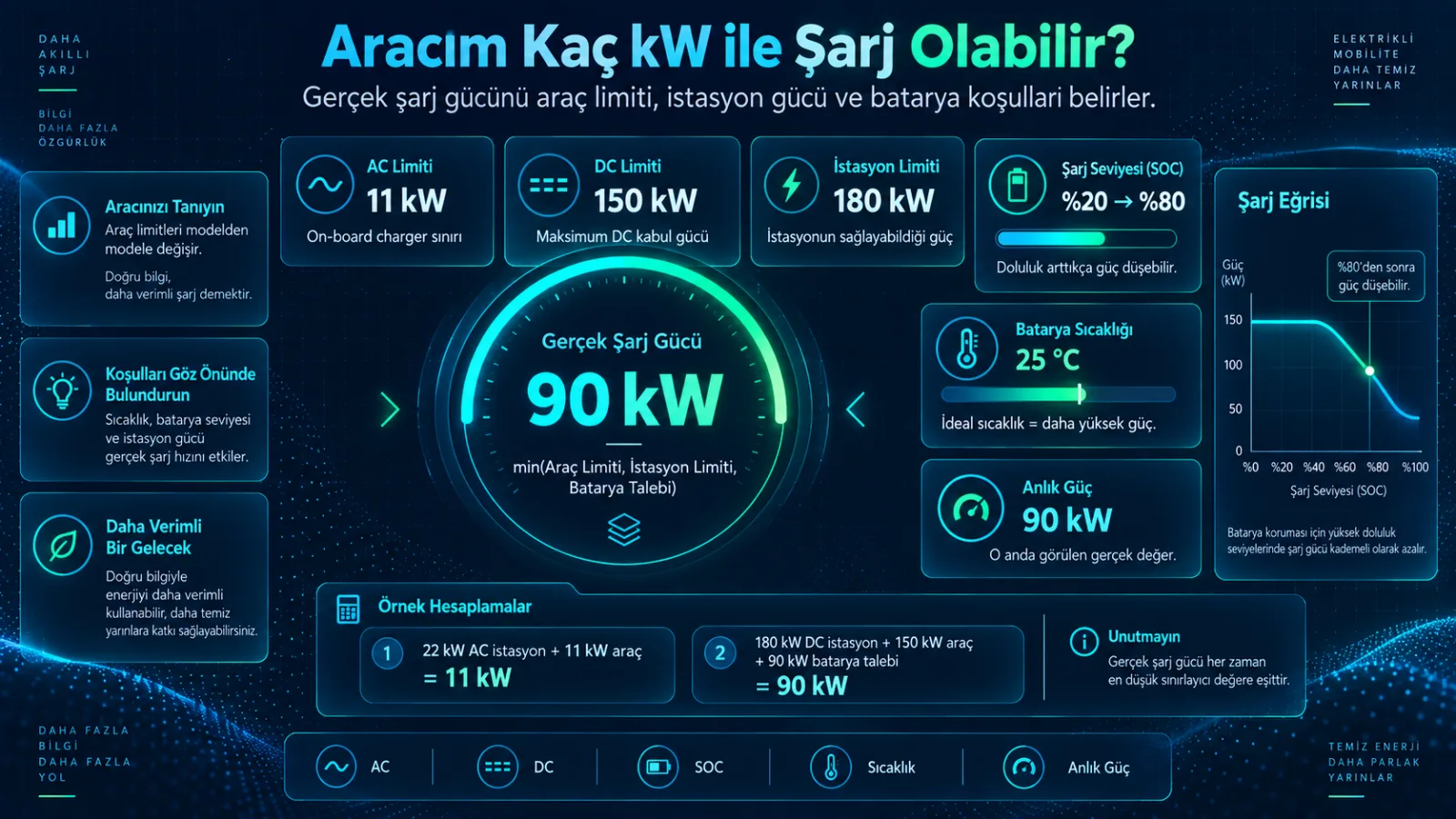
The lower of the vehicle’s and station’s maximum supported power provides an upper bound. If a station is rated at 180 kW and the vehicle can accept at most 100 kW DC, the vehicle cannot exceed roughly 100 kW. If a 150 kW-capable vehicle uses a 60 kW station, the station becomes the limit.
These are maximums, not guaranteed averages. Using only the station rating can therefore give an unrealistic time estimate.
How do you estimate AC charging time?
The same formula applies. Suppose a 66 kWh battery needs to go from 20% to 80%:
66 kWh × 0.60 = 39.6 kWh needed
At an average of 11 kW AC:
39.6 kWh ÷ 11 kW ≈ 3.6 hours, or about 3 hours 36 minutes.
Losses and power variations may make the real duration longer.
Will a 22 kW AC station charge every car at 22 kW?
No. If the car’s onboard charger accepts only 11 kW AC, it will generally charge at around 11 kW even on a 22 kW station. The higher-rated station will not halve that car’s charging time.
Why does charging slow down after 80%?
An EV battery usually does not accept the same power at every state of charge. A vehicle might request high power from 10% to 50%, a moderate level from 50% to 80%, and lower power from 80% to 100%. This changing pattern is the charging curve.
Consequently, the last 20% can take disproportionately long compared with an earlier 20% increase.
Why is average power important?
A car specified with a 150 kW peak DC rate may reach that level only for part of a session. It might then step down to 120, 80 and eventually 40 kW. Its session average is lower than its peak.
Whenever possible, estimate charging time with average power over the intended state-of-charge range, not the vehicle’s or station’s maximum rating.
What else affects charging time?
- Battery temperature: a very cold or hot battery may accept less power.
- State of charge: power often drops as the battery fills.
- Vehicle limits: each model has its own AC and DC capabilities.
- Station capacity: the unit cannot supply more than it has available.
- Power sharing: a dual-connector DC station may divide its total capacity between two vehicles.
- Electrical and conversion losses: not all energy drawn from the grid reaches the battery.
A 120 kW station with two active connectors, for example, may deliver a different power to each car than it would with one car connected.
A practical three-step estimate
You need the battery capacity, starting and target state of charge, and an estimated average charging power.
For a 75 kWh battery going from 20% to 80% at 90 kW average:
- Energy needed: 75 × 0.60 = 45 kWh
- Time: 45 ÷ 90 = 0.5 hour
- Approximate theoretical result: 30 minutes
This is a mathematical estimate, not a promised charging time.
Example charging times
The following values are theoretical comparisons assuming constant power:
| Energy needed | 11 kW | 22 kW | 60 kW | 120 kW |
|---|---|---|---|---|
| 20 kWh | 1 h 49 min | 55 min | 20 min | 10 min |
| 40 kWh | 3 h 38 min | 1 h 49 min | 40 min | 20 min |
| 60 kWh | 5 h 27 min | 2 h 44 min | 1 hour | 30 min |
| 80 kWh | 7 h 16 min | 3 h 38 min | 1 h 20 min | 40 min |
Vehicle limits, battery conditions and the charging curve change real-world times.
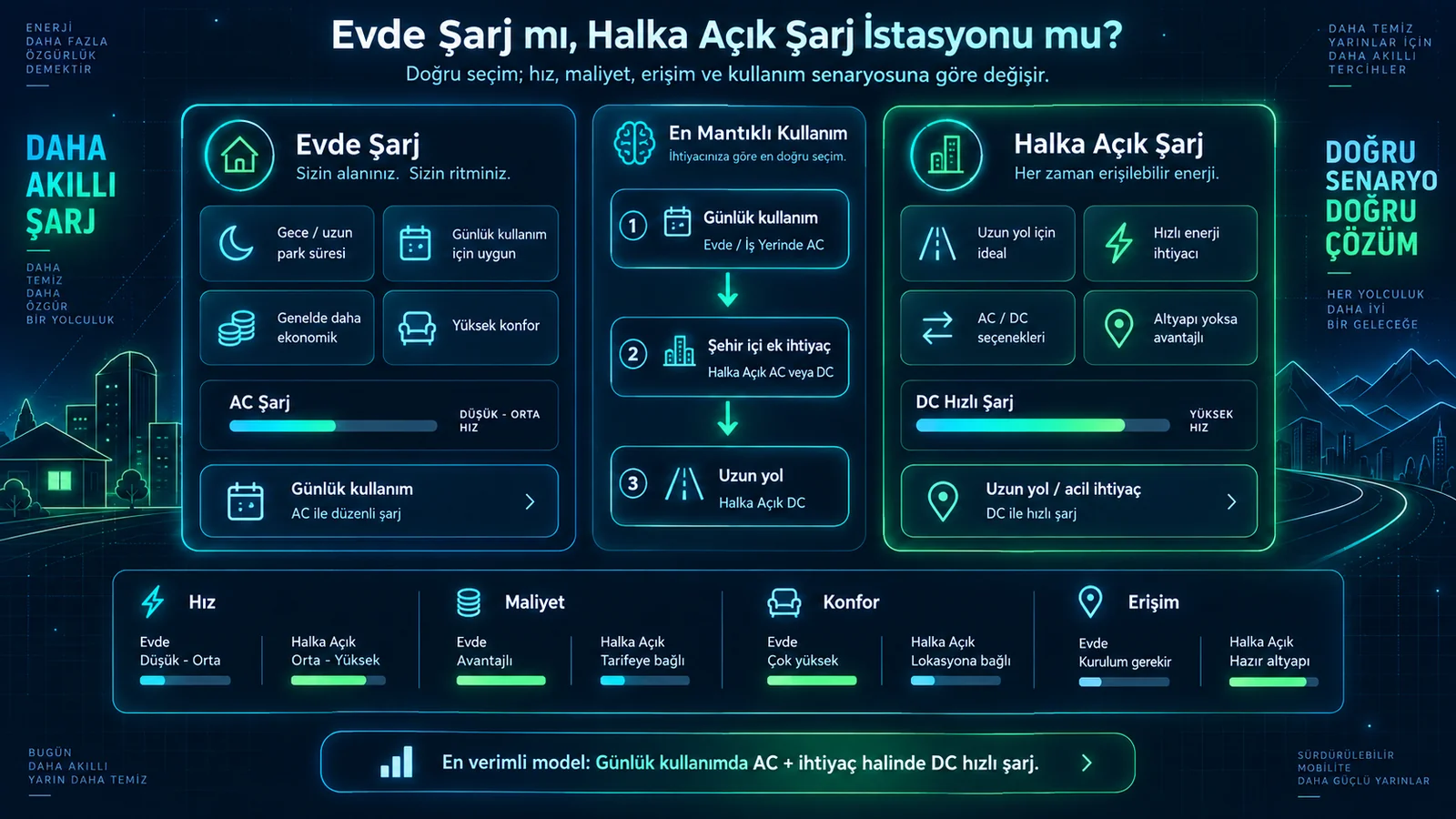
Do you always need a more powerful station?
No. A car limited to 80 kW DC may see little difference between 180 and 300 kW stations. If it remains parked overnight, AC charging may be a more sensible option than a 120 kW DC installation. Choose power for the use case.
The most common calculation mistake
Dividing full battery capacity by the station’s maximum power ignores the starting charge, target charge, vehicle limit and charging curve.
A more useful approximation is:
Energy required for the planned session ÷ realistic average charging power
Conclusion
EV charging time can be estimated with a simple formula, but actual time depends on both vehicle and station. Battery temperature, state of charge, the charging curve, power sharing and losses all affect the result. A station’s advertised kW rating does not mean that power will be delivered throughout the session.
About the author
Charge Teknoloji
Charging Infrastructure Team
Charge Teknoloji develops locally manufactured DC charging stations and OCPP-compatible charging network software.
LinkedIn arrow_outwardBe the first to hear about updates
Follow new content on electric vehicles and charging technologies.