What Is the Difference Between 30, 60, 120 and 180+ kW Charging?
Compare DC charging power levels, vehicle compatibility, power sharing and which station rating may suit different locations.
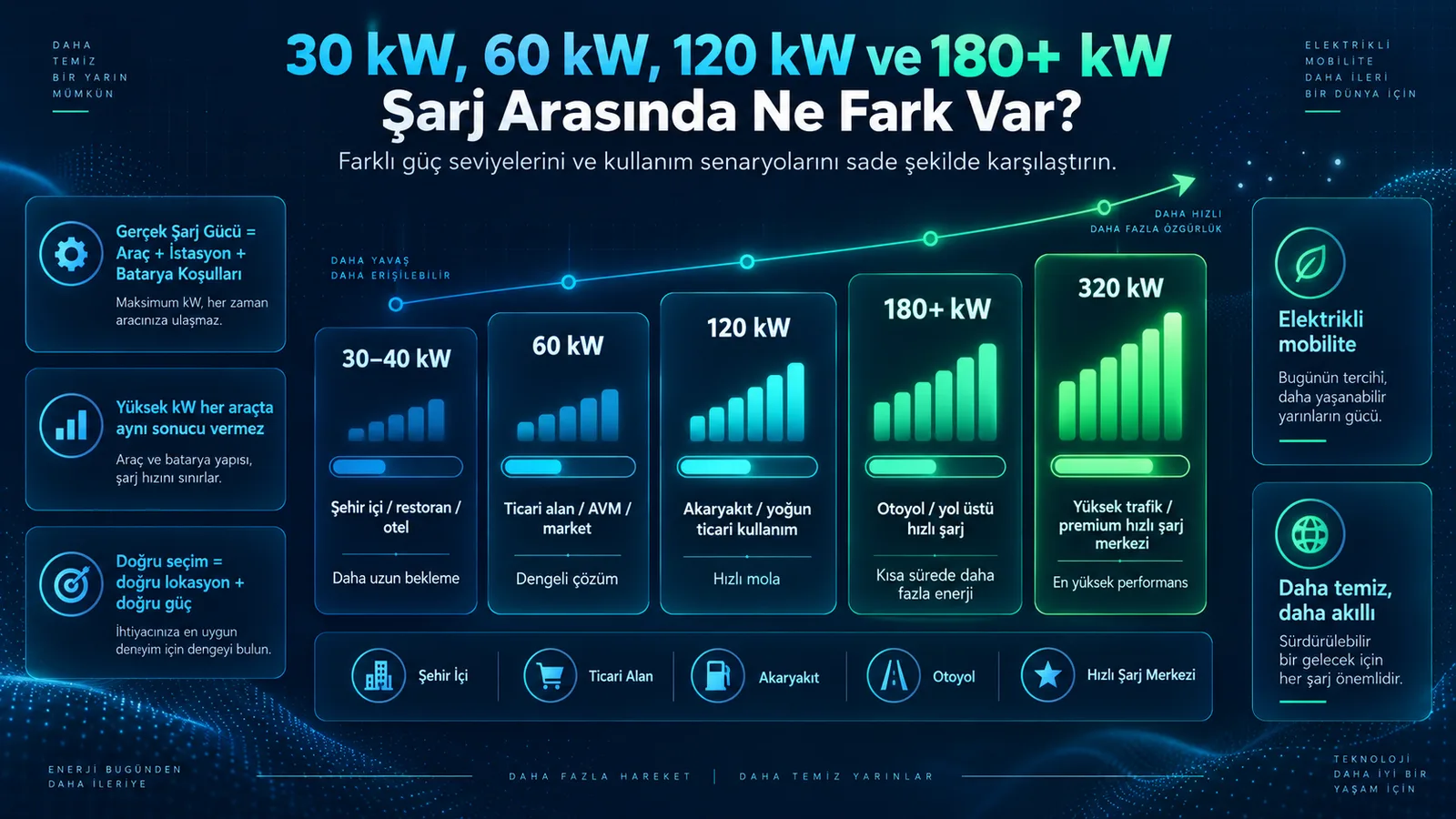
Table of contents
What Is the Difference Between 30, 60, 120 and 180+ kW Charging?
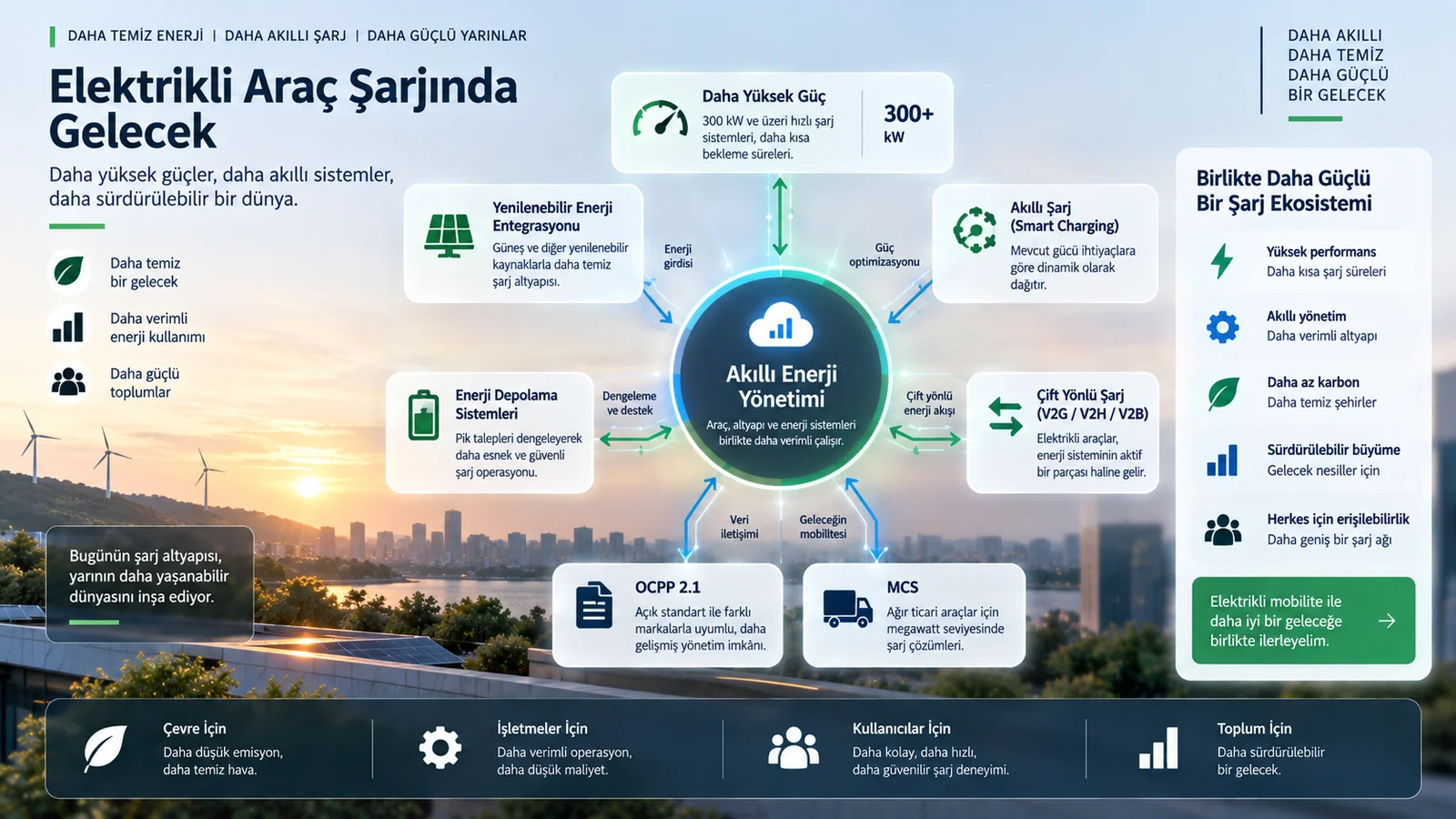
The kW rating is one of the first specifications people notice on a DC charging station. Systems may be rated at 30, 40, 60, 90, 120, 180, 240 or 320 kW. More power can transfer energy faster under suitable conditions, but the highest-rated charger is not automatically the best investment. The right rating depends on the vehicles, the site and how people use it.
What does the kW rating mean?
Kilowatts express power: the rate at which energy can be delivered at a given moment. At a constant rated output for 30 minutes, 30 kW would deliver 15 kWh, 60 kW would deliver 30 kWh and 120 kW would deliver 60 kWh.
These figures are mathematical examples, not guaranteed session results. A vehicle may not accept the station’s full power throughout charging.
The key rule: station power is not the whole story
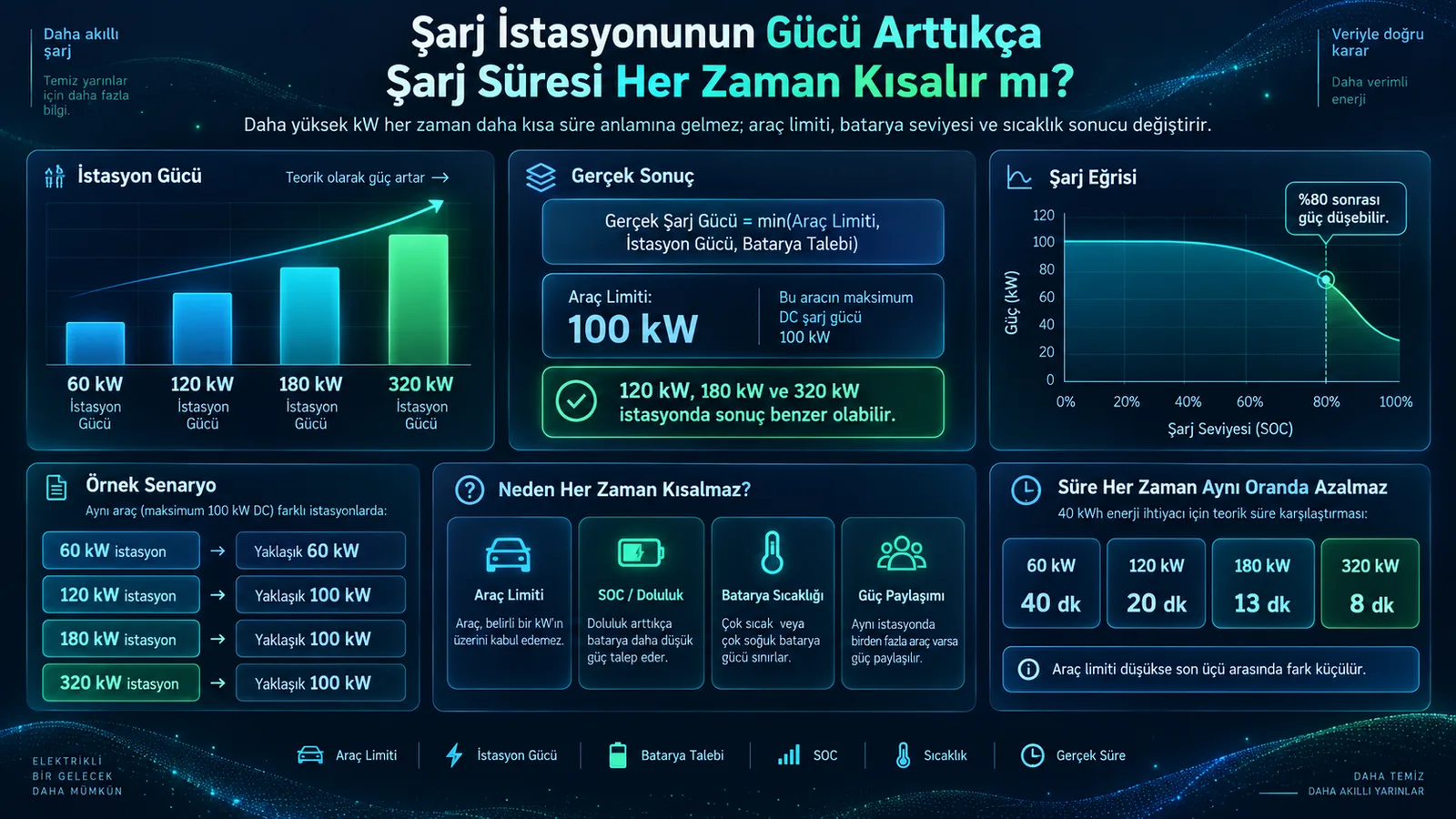
A car limited to 90 kW DC cannot take 180 kW simply by connecting to a 180 kW station. Conversely, a car capable of 180 kW is limited by a 60 kW station. Actual charging power is shaped by the station, the vehicle and current battery conditions together.
Where can 30–40 kW DC make sense?
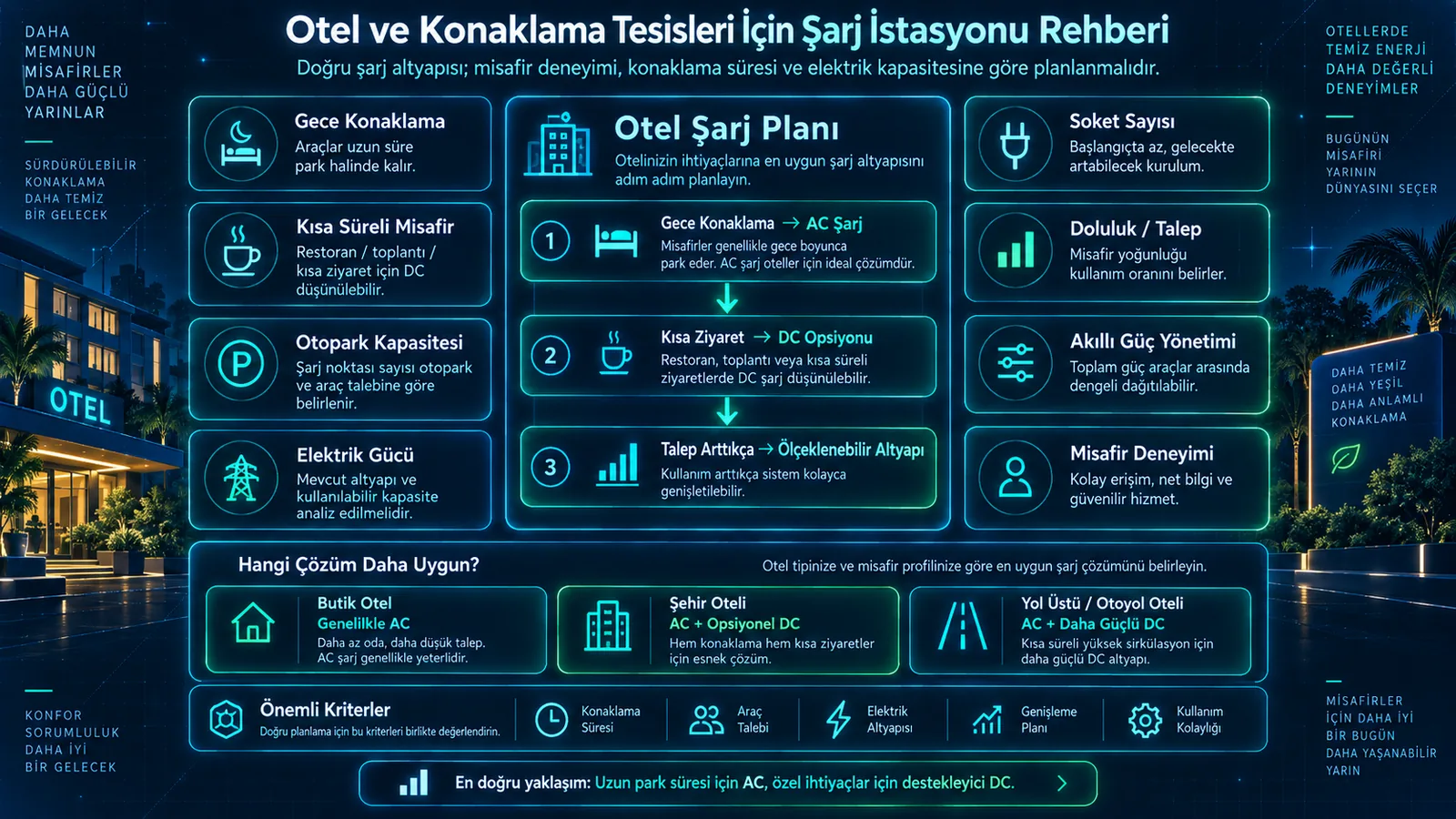
Lower-power DC can be considerably faster than typical AC while potentially needing less infrastructure than high-power DC. It can suit restaurants, hotels, urban commercial sites, service points and places where vehicles stay around 45–90 minutes.
At a constant average of 40 kW for 45 minutes, the theoretical energy delivered is 40 × 0.75 = 30 kWh. For many vehicles, that is a useful top-up.
Where can 60 kW DC make sense?
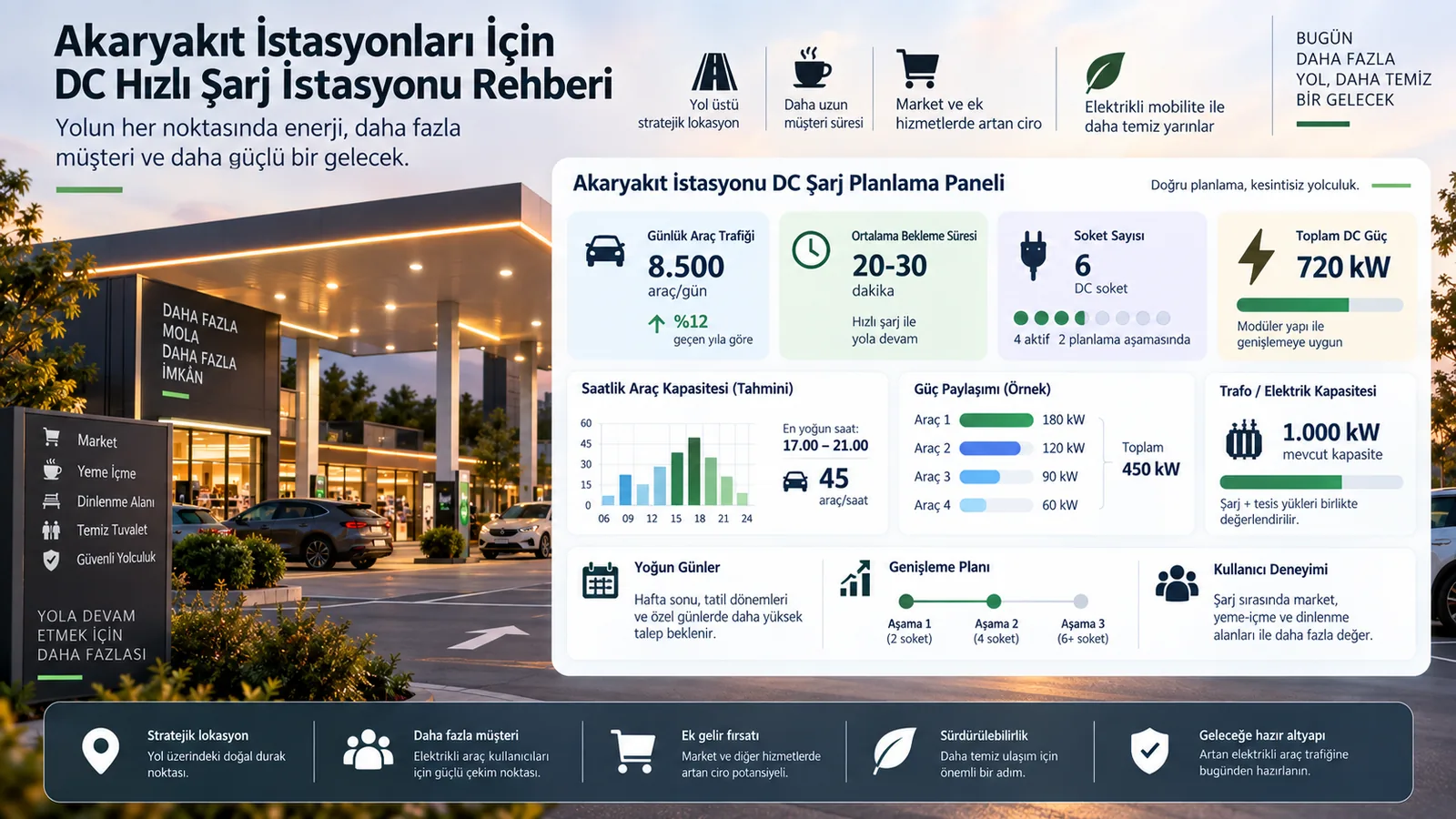
60 kW can be a middle ground for urban or medium-length stops: restaurants, shopping centres, markets, hotels, smaller fuel stations and city charging points. At a constant 60 kW, half an hour would deliver 30 kWh.
For a vehicle consuming 18 kWh/100 km, that energy corresponds to roughly 165 km in a simplified calculation. Actual range and energy delivered will differ with consumption and the charging curve.
Where can 90–120 kW DC make sense?
These ratings suit locations where users expect a shorter wait: fuel stations, intercity roads, busy commercial areas and fleet operations. At a constant 120 kW, 20 minutes could theoretically deliver 40 kWh. That can make a 20–30 minute stop useful, provided the vehicle can accept the power.
Where can 150–180 kW DC make sense?
Higher vehicle turnover and shorter stops often make this class relevant on highways, at busy fuel stations, at intercity rest areas and at high-traffic charging hubs. Compatibility matters more as power rises: a vehicle limited to 80 kW will not charge at 180 kW on a 180 kW station.
When do 240–320 kW systems make sense?
They can suit highway corridors, high-volume sites, premium fast-charging hubs and locations serving newer vehicles with high charging capability. Depending on the hardware, the station’s total power may be supplied to one vehicle or distributed across connectors and modules. Power-sharing behaviour is therefore as important as the headline rating.
How much can a higher rating change charging time?
If a vehicle could accept a constant average power while receiving 40 kWh, the mathematical comparison would be:
| Average power | Theoretical time |
|---|---|
| 30 kW | 80 minutes |
| 40 kW | 60 minutes |
| 60 kW | 40 minutes |
| 120 kW | 20 minutes |
| 180 kW | About 13 minutes |
| 240 kW | 10 minutes |
Real vehicles do not usually draw constant maximum power, particularly at higher states of charge. The gap between these theoretical values and real sessions can grow at higher station ratings.
Will a 180 kW-capable car draw 180 kW throughout a session?
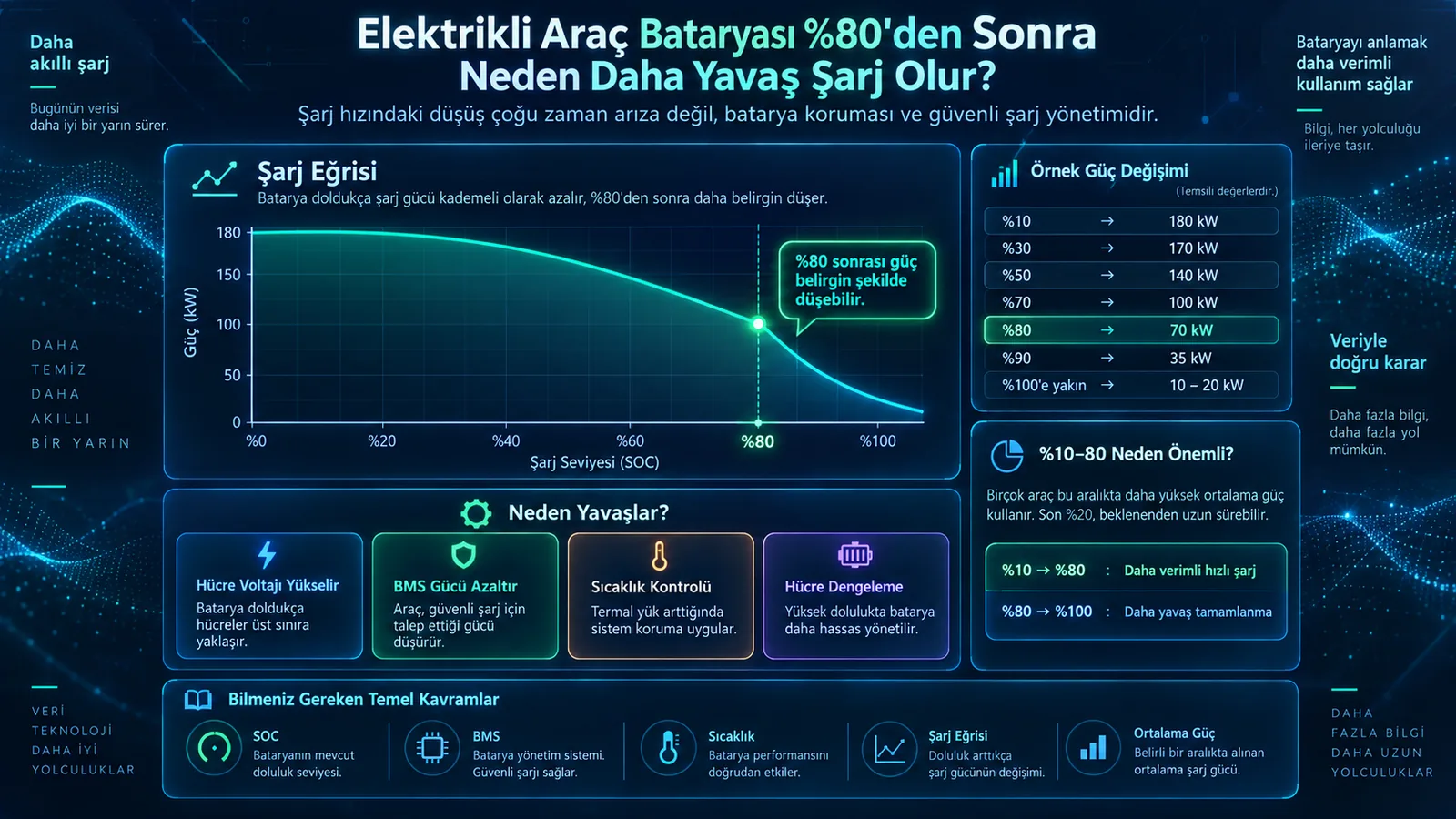
No. A hypothetical charging curve could deliver 180 kW at 10–30%, 150 kW at 30–50%, 110 kW at 50–70%, 75 kW at 70–80% and 40 kW above 80%. Average power, not just peak power, determines the overall time.
Battery management may reduce power as state of charge rises or when the battery is too hot or cold. A car arriving at 90% may draw little power even from a 320 kW station. In cold weather, a vehicle rated for 180 kW might initially request only 50–60 kW before the battery warms.
Do 400 V and 800 V vehicles differ?
The relationship Power = Voltage × Current means a higher-voltage architecture can transfer the same power at a lower current. That can help at 200 kW and above, but an 800 V-class battery alone does not guarantee high-speed charging. Station voltage range, vehicle design and battery conditions must also match.
As power and current rise, cable cross-section, connector temperature and cooling become more critical. Some high-power DC cables use liquid cooling to keep the cable manageable while transferring high current safely.
What does “180 kW” mean on a dual-connector unit?
It may mean 180 kW total, not 180 kW per connector. Depending on its design, a dual-connector 180 kW unit might supply up to 180 kW to one vehicle, or split output as 90 + 90 kW, 120 + 60 kW or dynamically according to demand.
Always ask whether a figure is total station power or per-connector power.
What is dynamic power sharing?
It allocates available capacity to the vehicles that can use it. On a 240 kW system, for example, a vehicle requesting 150 kW and another requesting 60 kW could receive those amounts simultaneously. The remaining 30 kW might be unused or allocated elsewhere, depending on system design. As one car’s demand falls, another may receive more.
How does higher power affect site infrastructure?
A 60 kW station and a 320 kW station do not impose the same grid demand. With multiple high-power units, transformer capacity, main distribution boards, cable sizes, protection and contracted power all become more significant. Equipment selection must be tied to an electrical site assessment.
Is buying the highest rating economical?
Not always. Greater power often means higher equipment, connection and installation costs. A hotel where guests park overnight may not need a 320 kW unit; a highway stop where drivers stay 15–20 minutes may benefit from high power.
| Location | Indicative starting point |
|---|---|
| Hotel or restaurant | AC or 30–60 kW |
| Urban commercial site | 40–90 kW |
| Shopping centre or busy retail | 60–120 kW |
| Fuel station | 120–180 kW |
| Intercity route | 120–240 kW |
| Highway charging hub | 180–320 kW+ |
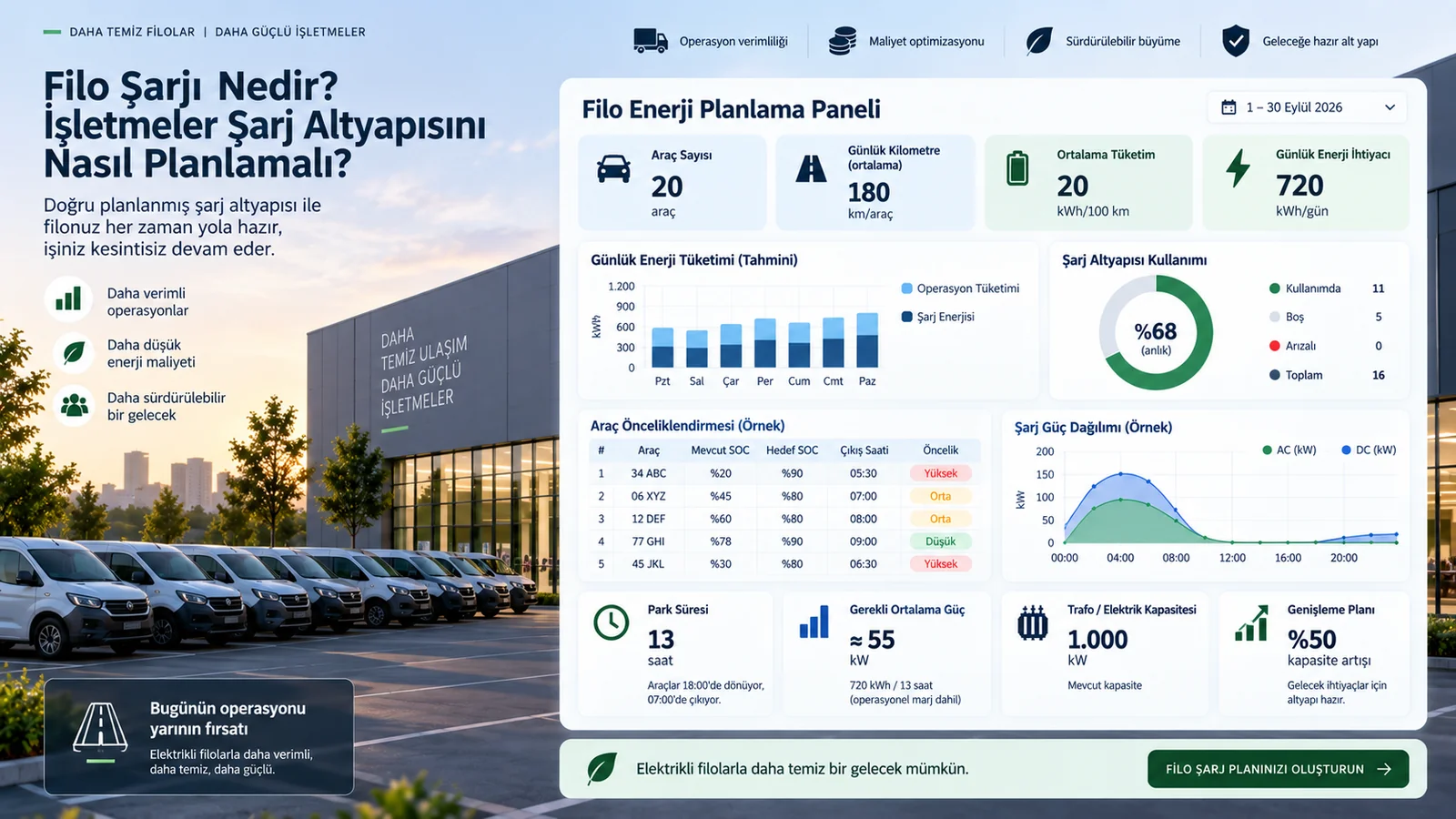
| Fleet | Depends on operations |
These ranges are not fixed standards. Assess each site’s vehicles, traffic, dwell time, electrical capacity and budget.
Why does the vehicle mix matter?
If most visiting cars accept only 60–80 kW, a 320 kW unit may have limited speed benefit today. A site attracting many vehicles capable of 150, 200 or 250+ kW may make better use of a higher rating. Operators can also plan for future models without installing maximum power before demand justifies it.
Planning stronger grid infrastructure, choosing a modular design or allowing space for future power modules can make expansion easier later.
What should drivers and operators compare?
Drivers should check the vehicle’s maximum DC rate, the station’s maximum rate and the power the battery can accept now. Operators also need to consider vehicles served per hour, connectors, total capacity, power sharing, site infrastructure, investment and expected traffic.
Conclusion
The main difference between 30 and 320 kW DC systems is the maximum power they can supply, but more power is not automatically better. Lower-power DC may suit longer urban stops; 120–180 kW may suit faster roadside stops; 240–320 kW and above may suit high-traffic hubs. Ask how much power this location actually needs, not simply which charger has the largest rating.
About the author
Charge Teknoloji
Charging Infrastructure Team
Charge Teknoloji develops locally manufactured DC charging stations and OCPP-compatible charging network software.
LinkedIn arrow_outwardBe the first to hear about updates
Follow new content on electric vehicles and charging technologies.